

optoVIS-4 - transmission of visible light intensity
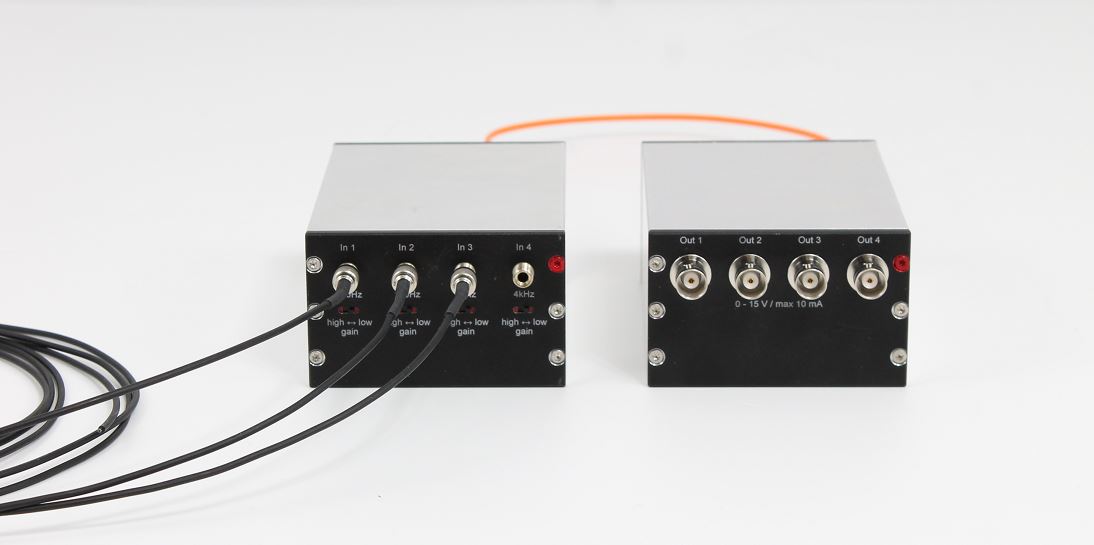
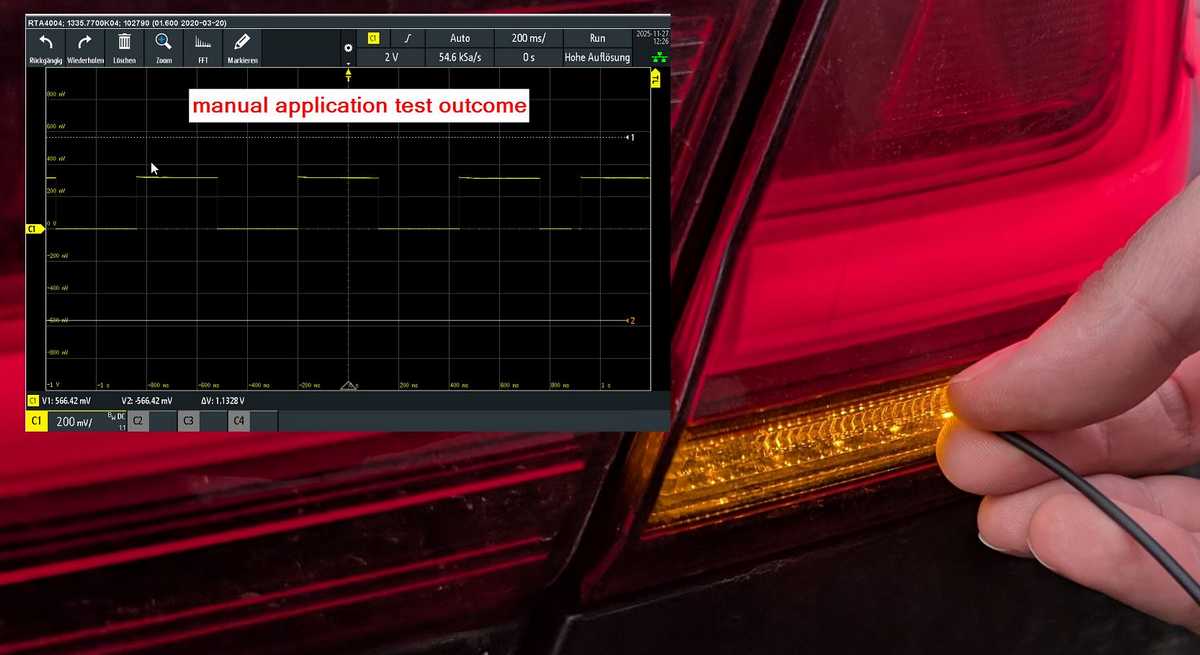
The optoVIS-4 system is used for the digital optical transmission of visible light intensity which is converted to an electrical output signal. With this setup the correct light output and flickering of different lighting solutions in the industrial and automotive sector can be evaluated.
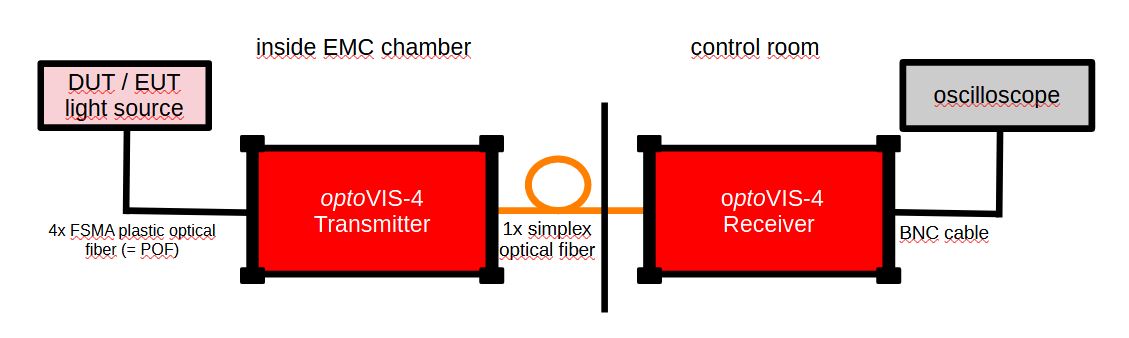
The system consists of two battery supplied transceivers connected to each other with an optical fiber. With the optical transmission and the shielded case, the system is well equipped for EMI and EME tests with automotive standards such as CISPR 25 class 5.
The picture shows the version with chromated, i.e. conductive housings. The standard housing is anodized in red, i.e. isolating housing.
Application
Technical data
| Channels: | 4 channels |
| Analog bandwidth: | up to 4 kHz (cutoff frequency) |
| Sensitivity: | selectable, high and low gain setting available for each channel (dip switch) |
| Data direction: | unidirectional |
| Input (transmitter): | Input (transmitter): 4x FSMA via plastic optical fiber (= POF) attached to the light source |
| Output connector (receiver): | BNC |
| Output (receiver): |
tested outputs: |
| Power supply: | integrated batteries 4 Ah, consisting of 5x NiMH cells, 6 V operating time with fully charged batteries: approx. 13 h operating time can be extended with an external battery pack |
Downloads
Accessories and options
- External batteries / power supply available
- Push-Pull charge connector (advantage: reduced setup time)
- ...